


Tanker Market: Efficiency Losses May Push Freight Rates Higher Again
Source:Beyond Shipping
2026-07-30
Despite claims by the Houthis that the Bab el-Mandeb Strait has not been closed and that recently announced maritime measures are directed only at Saudi vessels, many tanker operators may think twice before sending their ships into the Red Sea.
In recent months, Saudi Arabia has responded to the crisis in the Strait of Hormuz by increasing crude oil flows through its East-West Pipeline to the Red Sea terminal at Yanbu. According to reports, volumes have more than quadrupled compared with the same period in 2025, exceeding 4 million barrels per day in June and early July.
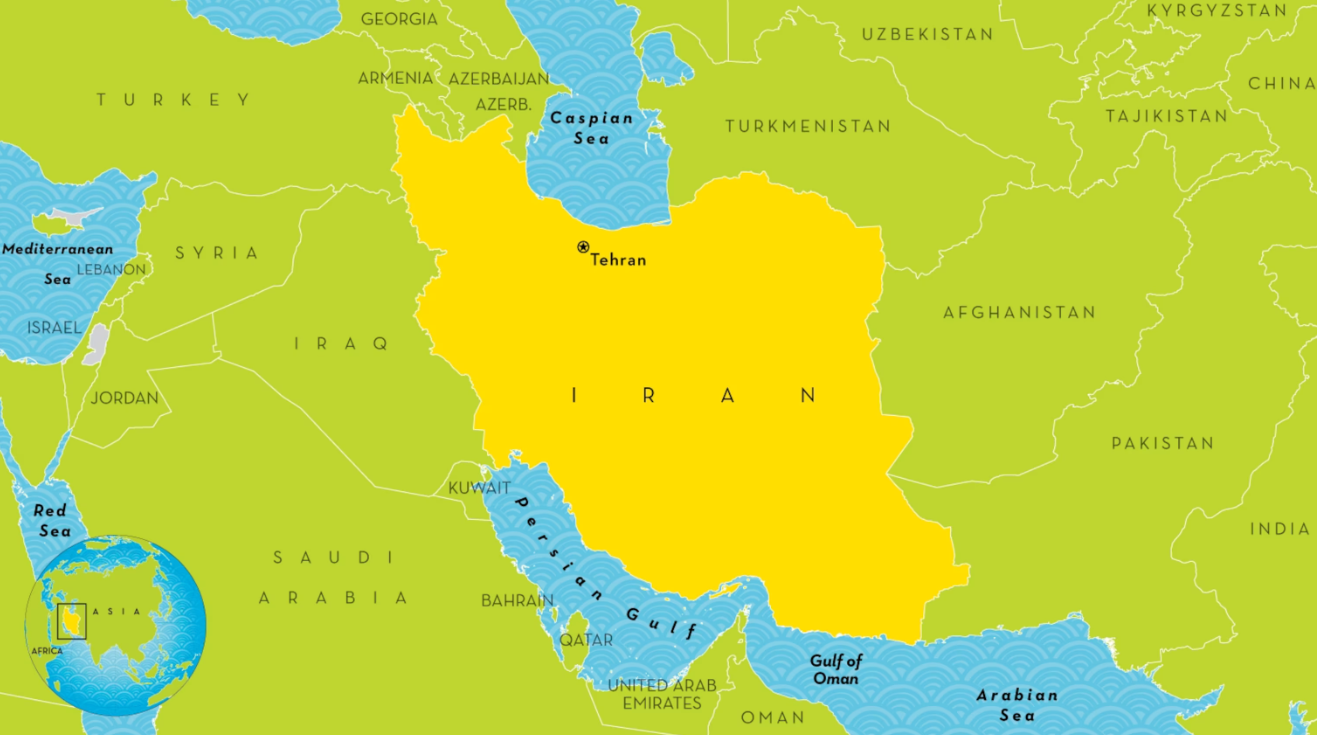
According to data from Poten & Partners, before the recent Red Sea crisis, approximately 2.5 million barrels of oil per day were transported southward through the Bab el-Mandeb Strait. Exports via Yanbu are mainly destined for China, India, Japan and South Korea.
Poten & Partners noted, however, that the East-West Pipeline only partially addresses the Strait of Hormuz issue while shifting Saudi maritime risk to another chokepoint. Indeed, the situation around the Bab el-Mandeb Strait is far from stable.
The specific circumstances in the Bab el-Mandeb Strait remain unclear. Meanwhile, charterers and shipowners are considering alternative routes, and market rumours suggest that Asian charterers have concluded deals to lift Saudi cargoes from Sidi Kerir on Egypt's Mediterranean coast.
Rerouting Saudi crude via the Mediterranean to Asia is an option, but it is clearly more complex. Since fully laden VLCCs cannot transit the Suez Canal, shipowners have two choices. One is to use the 320-kilometre Sumed pipeline, which connects Ain Sukhna on the Red Sea to Sidi Kerir. A VLCC would discharge part of its cargo at Ain Sukhna, then transit the Suez Canal and reload the oil at the Mediterranean terminal.
The second option is to use Suezmax tankers instead of VLCCs. However, VLCCs offer significant economies of scale on long-haul voyages to Asia, especially those departing from the Mediterranean.
Poten & Partners estimates that shipping Middle Eastern crude via the Mediterranean from Yanbu to South Korea would extend the voyage from 24 days to 54 days. While commercially feasible, this is highly inefficient and would substantially increase delivery costs for Saudi crude in Asia.
Poten & Partners pointed out that if the conflict between the Houthis and Saudi Arabia escalates further and the Bab el-Mandeb Strait is blocked, the impact on the tanker market could be significant. Saudi crude would be diverted towards Europe, Atlantic crude would flow eastward, demand for Suezmax tankers would rise, and effective tanker supply capacity would shrink considerably.
Poten & Partners concluded, "Not using the Bab el-Mandeb Strait to ship Yanbu crude to Asia means that even a moderate diversion would result in a substantial increase in tonne-mile demand, thereby boosting tanker freight rates."
Meanwhile, shipbroker Gibson stated, "Overall, the dual chokepoint constraint represents an additional layer of operational friction, leading to higher freight rates and longer transit times. These dynamics are clearly positive for the tanker market."
Hot News