


A passenger ship carrying 243 people went missing in severe weather, with one person confirmed dead
Source:
2026-09-14
According to Indonesia’s search and rescue authorities, in the early hours of September 13 local time, the Indonesian passenger ship “Virgo Transport 8” went missing in the Java Sea, with 243 passengers and crew on board.
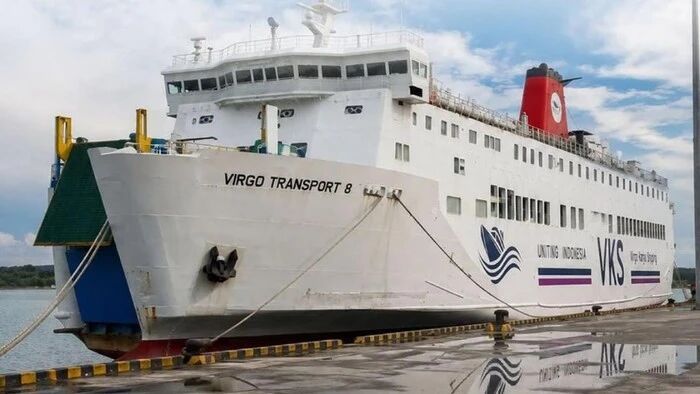
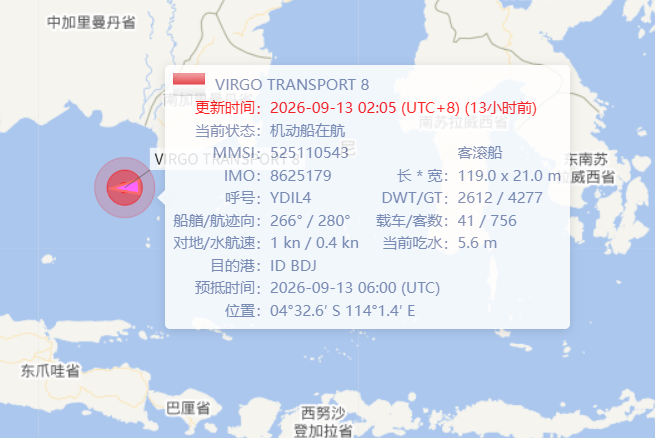
The “Virgo Transport 8,” operated by the Indonesian company PT Virgo, departed Surabaya, East Java, at 10:13 a.m. on September 12, bound for the Banjarmasin (Ma Chen) pier in South Kalimantan. While sailing in the Java Sea, the vessel encountered severe convective weather, and the captain reported to shore that the hull was listing. At around 2 a.m. local time on September 13, the vessel completely lost contact with shore. Its last known position was about 80 nautical miles from the Basirih search and rescue pier in Banjarmasin, at coordinates 4°31′51.82″S, 114°2′6.88″E.
Public ship records show that the “Virgo Transport 8” is a passenger-cargo roll-on/roll-off vessel, IMO number 8625179, built in 1987, about 119 meters long, about 21 meters wide, with a gross tonnage of 4,277 tons. It flies the Indonesian flag and is 39 years old.
According to an official of Indonesia’s state-owned port operator Pelindo, citing local media reports, the ship sprang a leak in severe weather and later capsized and sank. However, Indonesia’s National Search and Rescue Agency has not yet confirmed the condition of the vessel.
Indonesia’s National Search and Rescue Agency (Basarnas) received a missing-vessel report from the operator PT Virgo at 4:10 a.m. that day. It then dispatched search and rescue vessels to the area of the last known position, with an estimated voyage of about five hours, while also mobilizing helicopters for aerial search missions. The water police of the South Kalimantan police and the local naval base also joined the joint search and rescue operation. The rescue team was equipped with sonar devices and underwater robots for underwater detection and the search for missing people. Two tugboats operating near the incident area also joined the rescue. In the first batch, 54 people were rescued, of whom 53 survived and one was confirmed dead. The survivors were sent to local hospitals for examination and treatment. As of press time, the number of rescued people had risen to about 110, and related figures were still being updated.
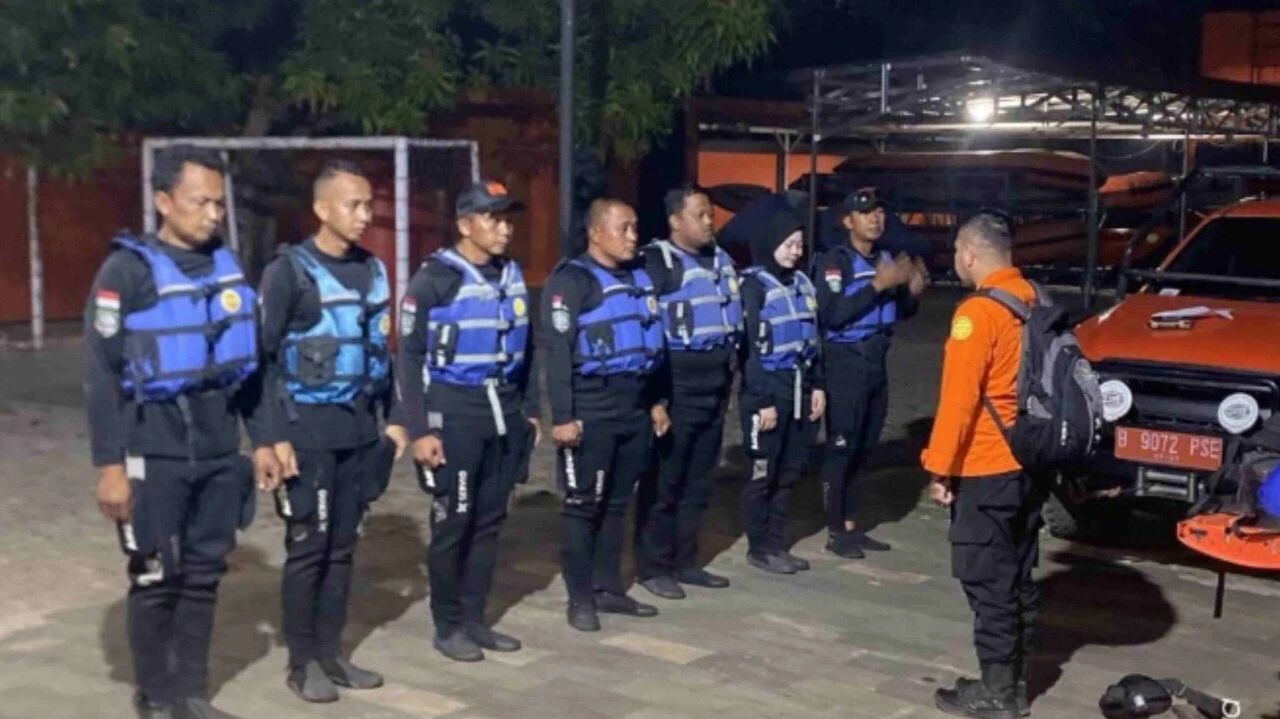
Search and rescue mission coordinator Sudayana said waves in the incident area were about 2 to 2.5 meters high, posing a risk to small boats, and the rescue team had prioritized the use of large vessels. He acknowledged: “Current conditions are very dangerous, even for our approximately 40-meter-long rescue ships.”
CCTV reporters learned from the Chinese Embassy in Indonesia that, as of now, no reports have been received of Chinese citizens being endangered in this accident.
Indonesia is the world’s largest archipelagic country, and maritime passenger transport is one of the core modes of inter-island transportation. Due to factors such as frequent severe convective weather during the monsoon season, some old ships operating beyond their service life, and uneven route safety management, Indonesia’s coastal waters have long faced a relatively high navigation safety risk. The International Maritime Organization has repeatedly warned that Southeast Asian waters need to further strengthen the inspection of old ships, severe weather early warning, and emergency response mechanisms.
Hot News