


South Korean marine engine makers surpass domestic shipyards in growth
Source:Beyond Shipping
2026-07-30
Recently, Chosunbiz reported that South Korea's two leading marine engine manufacturers—Hanwha Engine and HD Hyundai Marine Engine—have already secured orders in the first half of this year that match their total order intake for all of 2025.
Industry observers generally predict that the two companies are riding high on the global shipbuilding super-cycle, and that the current boom in the engine-manufacturing sector will last even longer than in shipbuilding itself. Once shipyards fill all their berths, capacity hits a ceiling and further production expansion is constrained. Marine engine makers, however, can broaden their customer base to overseas shipyards worldwide—including those in China—and flexibly ramp up production.
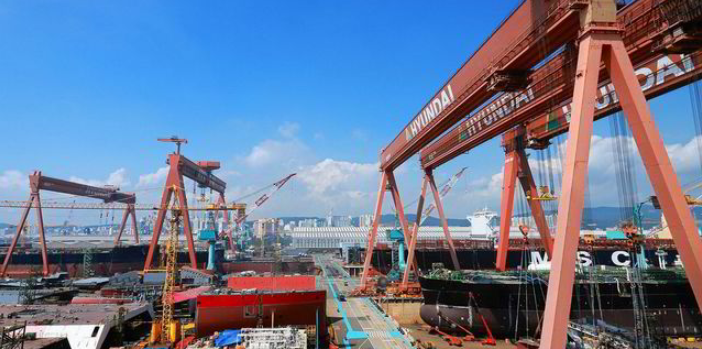
According to data disclosed by the Korean industry, Hanwha Engine and HD Hyundai Marine Engine together signed new orders worth more than 2 trillion won in the first half of the year.
Specifically, Hanwha Engine posted H1 orders of KRW 1.4348 trillion, reaching 81% of its publicly announced full-year 2025 order total of KRW 1.7706 trillion in just six months. HD Hyundai Marine Engine booked KRW 619.9 billion in orders during the same period, already exceeding its total 2025 order target of KRW 615.9 billion.
By comparison, Hanwha Engine's full-year operating revenue for fiscal 2025 was KRW 1.3711 trillion, while HD Hyundai Marine Engine's fiscal 2025 revenue stood at KRW 402.4 billion. The H1 order volumes for both companies have already surpassed their respective full-year 2025 operating revenues.
The global push for green and low-carbon shipping has further lifted engine prices and corporate profitability. Most new oceangoing vessels are now opting for dual-fuel engines that can run on both conventional fuel and liquefied natural gas (LNG), liquefied petroleum gas (LPG), or methanol. These engines command higher prices and are far more technically complex to manufacture than traditional diesel engines.
Hanwha Engine specialises in LNG-diesel dual-fuel engines while also developing models for methanol and other fuel pathways. HD Hyundai Marine Engine, meanwhile, holds a technological edge in LPG dual-fuel engines.
An industry insider noted: "Current order backlogs have already been pushed to deliveries in the second half of 2028. The companies' focus has shifted from simply pursuing total order volume to managing profitability. By weighing price against production efficiency, they can prioritise orders for higher-margin configurations."
As high-priced orders are gradually delivered, both companies' profitability has climbed rapidly: Hanwha Engine's operating margin rose from 9.5% last year to 14.9% in the first quarter of this year; HD Hyundai Marine Engine's margin increased from 18.9% to 24.4%.
It is estimated that Hanwha Engine will deliver 29 engines in the second quarter, 20 of which are from high-price contracts signed in 2024–2025. High-value orders booked by HD Hyundai Marine Engine are also beginning to show up in revenue. The vast majority of new orders finalised this year will be delivered in phases between 2028 and 2029.
To meet sustained strong demand, both companies are expanding capacity: Hanwha Engine is increasing production capacity for two-stroke main propulsion engines and plans to officially start production of four-stroke medium-speed engines in the third quarter of this year. HD Hyundai Marine Engine, rather than building new facilities on a large scale, is improving throughput by removing production bottlenecks, and industry watchers expect its equipment utilisation rate to exceed 100% starting in the third quarter.
Based on these developments, many analysts argue that the engine makers' cyclical upturn will outlast that of the shipyards. Even if Korean domestic shipyards cannot expand further due to berth constraints, engine manufacturers can still tap into incremental demand from overseas shipyards, including those in China.
Hot News