


$150 Billion! South Korea and the US Establish Shipbuilding Center
Source:
2026-07-30
On July 29, 2026, South Korea and the United States held an inauguration ceremony for the “Korea-US Shipbuilding Cooperation Center (KUSPC)” in Washington, D.C. The center is a follow-up body established after the two countries signed a memorandum of understanding on the “Korea-US Shipbuilding Cooperation Initiative (KUSPI)” in May of this year. It also serves as the executive coordination body for the “Korea-US Maritime and Shipbuilding Growth Alliance (MASGA) project,” which is part of the total $150 billion cooperation program announced in July 2025 under the framework of the US-Korea trade agreement.
The inauguration ceremony took place in Washington. South Korea’s Minister of Trade, Industry and Energy, Kim Jeong-gwan, and US Secretary of Commerce, Howard Lutnick, attended and delivered remarks. Also present were Acting Secretary of the Navy (Vietnamese-American) Tuan T. Nguyen, officials from the US Maritime Administration, lawmakers from both countries, and approximately 130 government and industry representatives, including senior executives from Korean shipbuilders such as HD Hyundai Group, Hanwha Ocean, Samsung Heavy Industries, and HJ Shipbuilding & Construction.
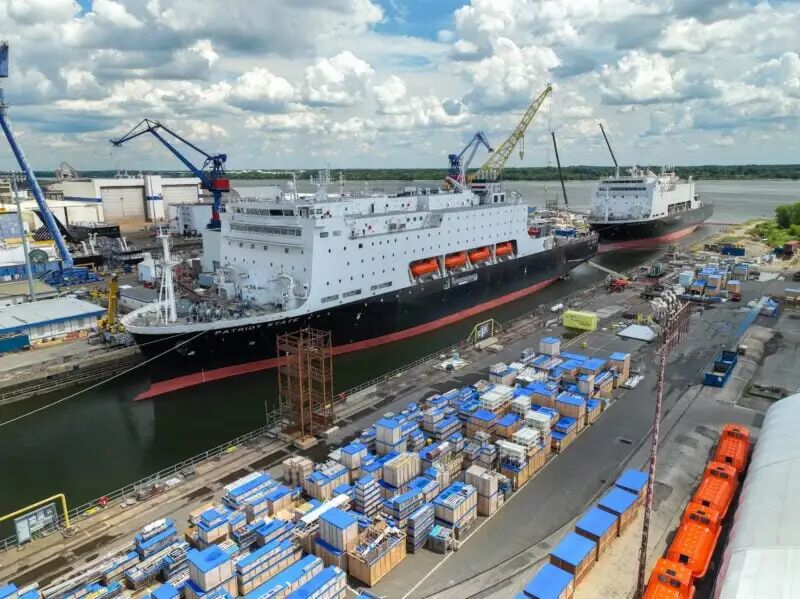
In his speech, Minister Kim said that KUSPC serves as a platform for bilateral shipbuilding cooperation. Through this platform, South Korea will provide technical support to US shipyards and advance work related to the $150 billion investment. He also expressed hope that the US side would provide corresponding support in terms of orders, incentive policies, and regulatory measures.
At the opening ceremony, Korean and American companies and institutions signed 15 memoranda of understanding covering four areas: industrial cooperation, supply chains, talent development, and joint R&D. Among them, HD Hyundai Heavy Industries, Hanwha Ocean, Samsung Heavy Industries, the Korea Shipbuilders' & Offshore Plant Association (KOSHIPA), the Korea Research Institute of Ships & Ocean Engineering (KRISO), and KUSPC jointly formed “Team Korea.” The consortium’s work directions include US shipyard retrofitting, building local supplier networks, and assisting Korean companies in entering the US market.
Specific cooperation details include:
- Industry and supply chain: HD Korea Shipbuilding & Offshore Engineering signed an agreement with Siemens Industrial Software on digital design and production technology development; the company will also conduct a productivity assessment of Frazier Industrial and introduce some automation solutions. HD Hyundai Samho will supply four container cranes to the Washington United Terminal at the Port of Tacoma. Hanwha Ocean signed an agreement with the Greater Philadelphia Chamber of Commerce concerning the participation of local manufacturers in the shipbuilding supply chain.
- Talent development: Hanwha Philly Shipyard partnered with Delaware County Community College to launch a shipbuilding training program; Samsung Heavy Industries and Vigor Marine Group will jointly build a maritime training center equipped with virtual/augmented reality welding systems. In addition, KRISO, KOSHIPA, KUSPC, and the American Bureau of Shipping (ABS) will jointly develop standards for maritime technology qualifications and safety certification.
The two governments announced the launch of a five-year joint research program, with total funding of approximately $80 million, supported by South Korea’s Ministry of Trade, Industry and Energy. The first batch of eight projects covers AI‑assisted ship design, robotics applications, autonomous welding, automated painting of large blocks, and autonomous navigation.
The Korean government has allocated about 6.6 billion won (approximately $4.8 million) for KUSPC’s operations this year. The center, headquartered in Washington, will handle productivity consulting, training, technology exchange, and investment project management, while also coordinating with the US Congress, government agencies, and industry organizations on issues related to Korean companies’ investments in the US, and participating in the coordination of follow-up projects under the MASGA framework.
Over the past year, several Korean companies have already reached cooperation agreements with US shipyards in areas such as autonomous vessels, naval construction, and facility upgrades. The operation of KUSPC will continue and expand upon the activities under these existing cooperation frameworks.
Hot News