


COSCO Shipping Bulk and Huawei: A Powerful Alliance!
Source:
2026-10-28
COSCO Shipping Bulk Co., Ltd. (hereinafter “COSCO Shipping Bulk”) and Huawei Technologies Co., Ltd. (hereinafter “Huawei”) recently jointly released an intelligent vessel scheduling solution, driving the transformation of dry bulk vessel scheduling from experience-driven to data- and model-driven.
The solution was released on October 21 during the “Digital and Intelligent” thematic forum of the 2026 North Bund International Shipping Forum, becoming one of the shipping digital and intelligent achievements showcased at the forum.
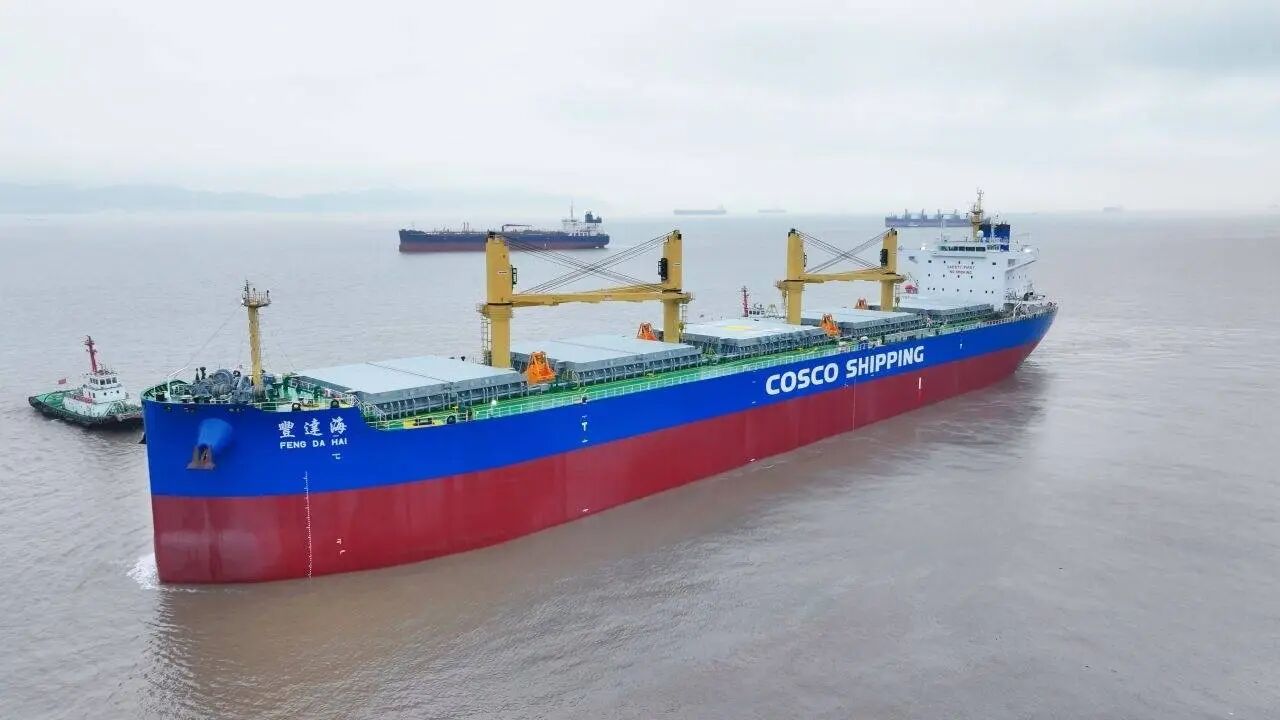
From experience-driven to data- and model-assisted
Scheduling decisions in dry bulk transportation involve multiple interrelated variables. Factors such as a vessel’s current position and availability, cargo loading and discharging requirements, existing charter arrangements, ballast voyage distance, and port operating conditions may all affect the vessel’s next deployment.
In this context, schedulers not only need to grasp vessel and cargo information, but also comprehensively judge the relationships among different arrangements and seek relatively suitable plans under constantly changing market and operational conditions. Introducing data and models into the scheduling process is expected to help companies process multidimensional information faster and support plan comparison and decision-making.
The cooperation between COSCO Shipping Bulk and Huawei centers on this business need. The solution aims to leverage data and modeling capabilities to improve vessel scheduling planning and promote a gradual shift in scheduling work from being primarily based on manual experience to being assisted by data and models.
AI applications have precedents
This cooperation is not COSCO Shipping Bulk’s first attempt to apply AI to its daily business.
In March 2025, COSCO Shipping Bulk successively launched AI industry applications such as “Commercial Loss Prevention Intelligent Assistant 1.0,” “Intelligent Ship-Finding Assistant,” and “Ship-Cargo Easy Assistant,” covering scenarios including loss-prevention information queries, chartering business support, ship-cargo matching, and business consulting.
In July this year, the company also built “Wuming” AI, an integrated intelligent agent/DSS dry bulk shipping intelligent operations platform, with applications covering vessel operations, business matchmaking, and voyage calculation, and supporting intelligent ship-cargo matching and market analysis. These applications show that COSCO Shipping Bulk is attempting to extend AI from single information query and business support tools to specific links closer to shipping operations.
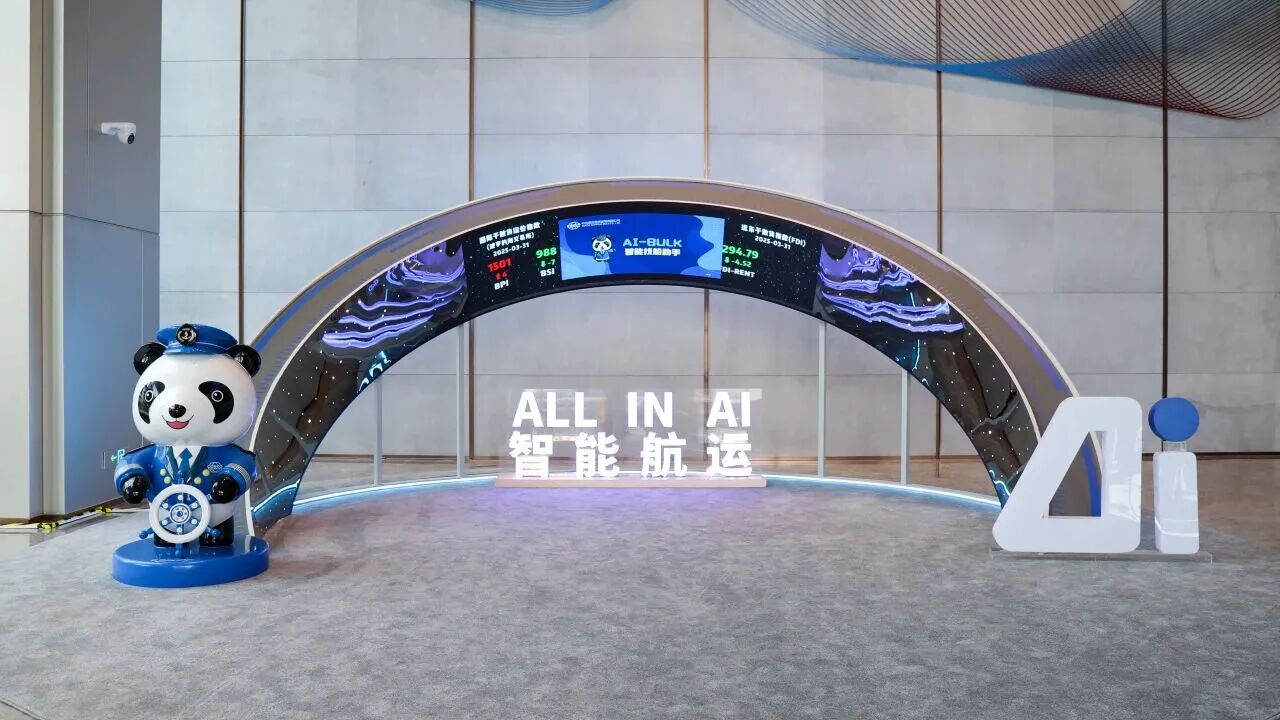
From the perspective of the business chain, ship-cargo matching, voyage calculation, and vessel scheduling are interrelated and mutually influential. Ship-cargo matching focuses on screening suitable vessel resources according to cargo transport demand; voyage calculation conducts cost and revenue calculations for specific voyages; and vessel scheduling needs to comprehensively consider vessel position and availability, charter performance requirements, schedule connections, and subsequent voyage arrangements, and coordinate vessel resource allocation.
Huawei’s port technology accumulation
Before cooperating with COSCO Shipping Bulk, Huawei had already carried out years of technological exploration in the smart port field, with applications covering 5G communications, terminal automation, remote equipment control, and port production scheduling. In recent years, with the development of large models and agent technologies, Huawei has further introduced AI into port production planning and safety management.
In September this year, Huawei released port intelligent planning and intelligent security solutions, attempting to use technologies such as large models and agents to optimize port production operations. Among them, the port intelligent planning solution uses agents to coordinate pilotage, berths, quay cranes, yards, and stowage, covering multiple stages of port production planning. Huawei says the solution can shorten production planning time from hours to minutes, with a plan acceptance rate exceeding 90%.
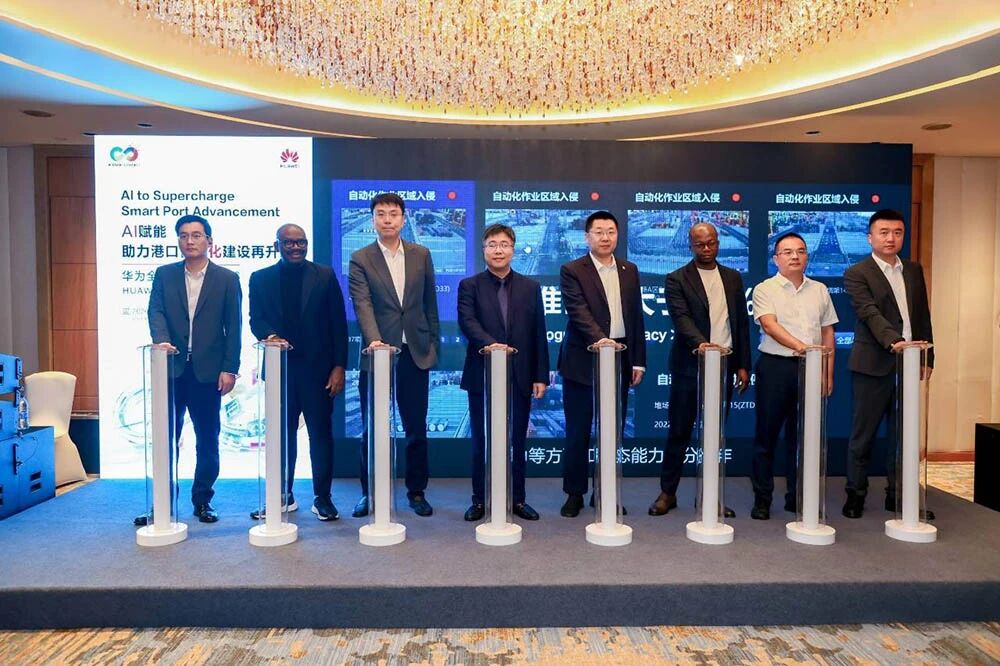
This indicates that Huawei’s AI applications in the port field are no longer limited to single-device automation, but have begun to extend to overall operational planning involving the coordination of multiple types of resources.
Before that, Huawei had cooperated with multiple port enterprises. In 2025, Huawei, together with Tianjin Port Group, Shandong Port Group Yantai Port Group, Shenzhen Port Group, and Ningbo Zhoushan Port, released smart port-related technological achievements involving terminal production operating systems, port operation and production data collaboration, blockchain platforms, and software R&D.
Huawei also continues to advance 5G and automated terminal construction, with related solutions covering scenarios such as port horizontal transport, remote control, and production coordination.
For Huawei, cooperating with COSCO Shipping Bulk may also mean that its port and shipping technology applications are further reaching shipowners’ fleet operations.
Digital and intelligent cooperation in the shipping industry deepens further
In addition to Huawei, COSCO Shipping has also carried out deep strategic cooperation with Alibaba and other enterprises in AI and digital transformation, promoting intelligent product iteration and application scenario implementation. The group has also built an intelligent computing platform featuring “one shipping logistics industry large model + N vertical industry models,” with total self-built and leased computing power exceeding 220P, and has built more than 130 AI application scenarios.
From the group-level digital and intelligent layout to COSCO Shipping Bulk introducing AI into vessel scheduling, these applications are moving step by step toward more complex shipping operation scenarios. However, vessel scheduling faces constantly changing markets, contractual constraints, and port conditions. Whether the model can truly fit actual business ultimately depends on whether it can be translated into measurable operational efficiency and business benefits.
Hot News