


EPS to Deploy AI Navigation on Dozens of Vessels
Source:
2026-08-28
According to China Maritime Service Network (CNSS), maritime navigation technology company Orca AI has announced an expansion of its partnership with Eastern Pacific Shipping (EPS), following the completion of a pilot program involving five vessels and covering over 130,000 nautical miles. Upon conclusion of the pilot, EPS will deploy Orca AI's SeaPod system on dozens of additional vessels.
SeaPod functions as a fully automated navigational aid, capable of processing multi-source information within seconds. It provides round-the-clock simulation and augmentation of manual watchkeeping capabilities, delivering real-time identification and assessment of even the most complex maritime traffic situations. Leveraging advanced computer vision and machine learning technologies, the system can detect, track, and classify targets at any range — including small objects — and push the relevant information, along with other critical target parameters, to a user-friendly operational interface.
Operational data collected during the pilot showed a 48% reduction in close-quarters encounter events per 1,000 nautical miles, with the average minimum passing distance increasing by 10%. Notably, one of the participating vessels, the oil tanker Pacific Sentinel (built in 2019, 49,999 DWT), saw an 84% reduction in open-water close-quarters encounters and a 50% increase in minimum passing distance within six months of system installation.
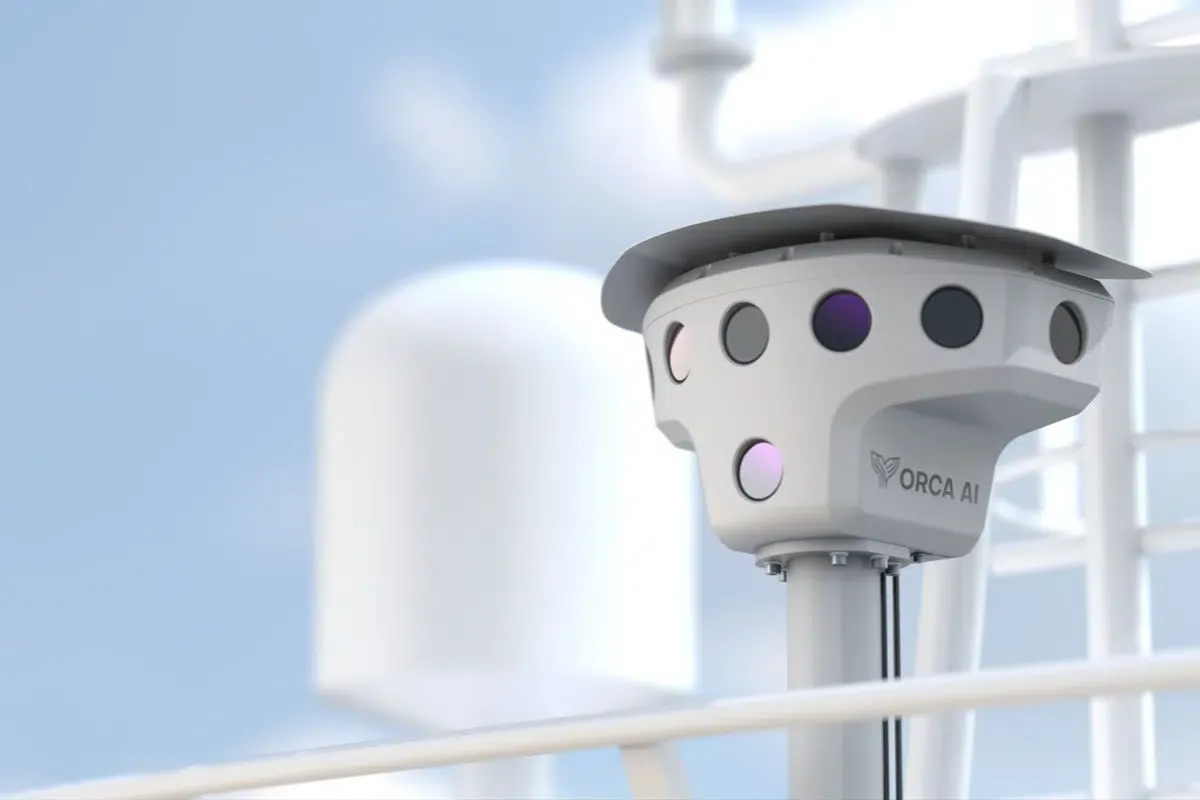
Orca AI's platform integrates vessel-based situational awareness with shore-based analytics. The SeaPod system, installed on the bridge, utilizes computer vision technology to identify and classify surrounding vessels and objects — including those not equipped with AIS, such as fishing boats and buoys — assisting bridge teams in maintaining situational awareness in congested waters and low-visibility conditions.
FleetView, on the other hand, provides shore-based teams with voyage data insights, enabling them to review operational incidents, identify trends, and support data-driven training and continuous improvement.
Sachin Saharawat, EPS's Technical Director, stated: "Our crew is at the heart of everything we do. Our goal is to equip masters and bridge teams with practical technological tools that enhance situational awareness and support safe decision-making. The pilot program has provided us with objective data on how navigational risk evolves over time, and the results have strengthened our confidence in rolling out the deployment across our fleet."
Hot News