


Held for Nearly 5 Months, "Sward" and Its 17 Crew Members Released; Somali Pirates Still Holding 4 Merchant Ships
Source:
2026-09-14
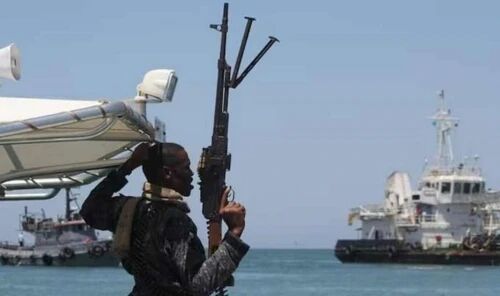
According to Agence France-Presse (AFP), citing several security sources in Somalia’s Puntland region, Somali pirates released the cargo ship MV Sward and its 17 crew members on September 11. The vessel had been hijacked in April this year. The sources confirmed that the pirates received a ransom but did not disclose the exact amount.
Release Process and Crew Composition
The Sward was released near the Puntland port of Garacad. A Puntland security source told AFP that after disembarking and coming ashore, the pirates got into several waiting vehicles. Another security source noted that the vehicles had been waiting before the pirates arrived in Garacad, suggesting the pirates may have maintained contact with an onshore network while at sea. Two other Puntland security sources also confirmed these details to AFP.
The Sward was hijacked by armed men off the coast of Somalia on April 26. Its 17 crew members—15 Syrians and 2 Indians—were held hostage for nearly five months. At the time of release, all crew members remained on board. No casualties have been reported, and their overall condition is stable. According to the website Responsible Statecraft, the pirates received about $1.7 million in ransom for releasing the Sward and its crew, but the amount has not been confirmed by other sources.
Used as a “Mother Ship” to Hijack Other Vessels
After the Sward was hijacked, the pirates used it as a “mother ship” to attack and hijack other vessels. According to Puntland security sources, the pirates used the Sward to hijack at least two Iranian fishing vessels and the Cameroon-flagged cargo ship MV Lutuf.
Regarding the release of the Lutuf, Puntland security sources told AFP in late August that $2.5 million was paid for the release of the ship and $40,000 for the release of the two Iranian fishing vessels. However, the Somali federal government gave a different account, saying the Lutuf was released after “sustained military pressure” by the Turkish Navy and Somali armed forces. During the operation, four boats used by the pirates were destroyed and 14 pirates were killed.
Notably, when the Lutuf was attacked, it was transporting Turkish weapons and satellite communications equipment to a Turkish military training facility in Mogadishu. The Puntland government said it had evidence that Somali government officials had spoken with the pirates by telephone, contradicting the official accounts from Ankara and Mogadishu.
Regional Piracy Activity Continues to Rise
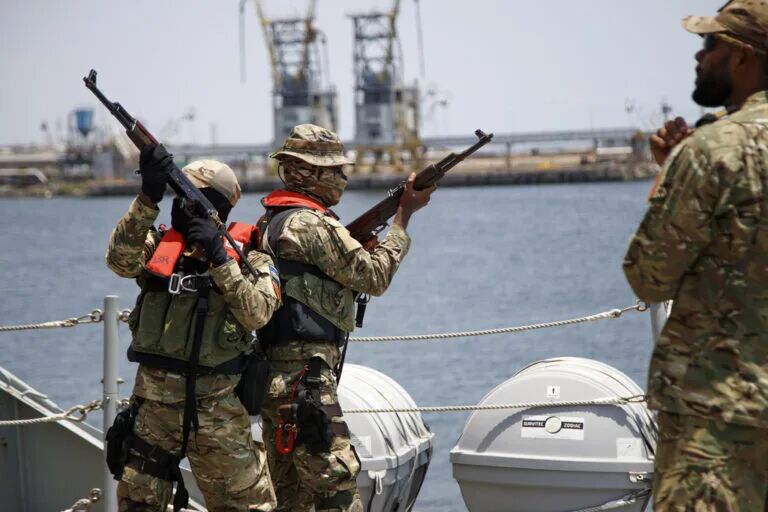
The release comes as piracy activity in the Gulf of Aden and off the coast of Somalia is rebounding significantly. According to International Maritime Organization (IMO) statistics, at least 15 attacks have been reported in the region this year, the highest level since 2013. In the same period in 2025, there were only 5, a significant increase.
IMO Secretary-General Dominguez previously warned after the hijacking of the tanker Seamull on August 20: “With the latest hijacking, six ships are now under the control of pirates and armed robbers, and the relevant waters are becoming too dangerous for seafarers. More than 90 innocent crew members are currently being held hostage, and their lives face constant uncertainty and threat.” He called for the immediate and unconditional release of these hostages.
Analysts noted that this strong resurgence of piracy stems from a combination of factors: First, international security forces have been forced to divert naval resources away from the Gulf of Aden due to Middle East conflicts, creating a security vacuum. Second, their modus operandi has escalated: pirates rely on hijacked merchant ships as sea-based mother ships, greatly enhancing their ability to operate in distant waters. Third, the local support system has revived; pirates have gained assistance from coastal communities and militias and have rebuilt a complete financing, coordination and shore-based support network. In addition, reports say pirates have begun using satellite internet services to track potential targets and communicate.
Four Merchant Ships Still Held
Although the Sward has been released, four merchant ships are still being held by Somali pirates off the coast of Somalia: the tankers Honour 25, Eureka, Asana and Seamull.
Among them, the Seamull was added to a U.S. sanctions list in December 2025. Washington identified it as part of Iran’s “shadow fleet” and accused it of using deceptive shipping practices to export Iranian oil.
An earlier assessment released by the Joint Maritime Information Center showed that among the detained vessels, the ransom demand for the Honour 25 was $3 million and for the Eureka was $10 million. The Honour 25 is a Palau-flagged product tanker. It was hijacked on April 21 about 30 nautical miles off Somalia’s Puntland region. Its 17 crew members include 10 Pakistanis. According to Pakistan’s Dawn, the families of the detained crew members recently held a protest in Karachi, demanding that the government speed up rescue efforts. The detained crew members have reported a lack of clean drinking water, food and medicine, and have repeatedly issued appeals for help via video and audio.
The EU’s Atalanta counter-piracy task force is currently carrying out monitoring missions in the region and continues to track the detained vessels. The Joint Maritime Information Center rates the threat level in the Gulf of Aden as “substantial” and maintains the level off the Somali coast and in the Somali Basin as “moderate.”
The Maritime Services Network reminds vessels passing through the Gulf of Aden and off the coast of Somalia to remain highly vigilant, closely monitor security advisories issued by UKMTO and MSCIO, and prepare anti-piracy contingency plans.
Hot News