


India Plans to Build 100 Ships!
Source:
2026-08-28
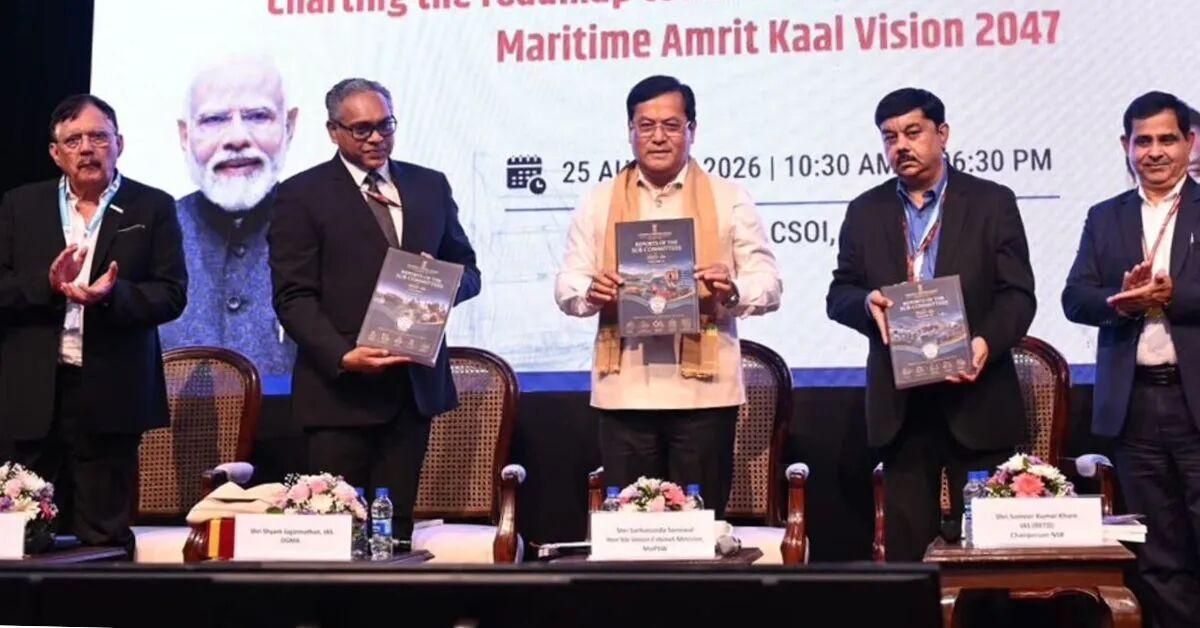
According to China Maritime Service Network (CNSS), the Indian government is steadily advancing its national shipping capacity expansion strategy, aiming to enhance shipping self-reliance and reduce expenditure dependence on foreign shipping services. The restructured National Shipping Board of India (NSB) recently held a new dialogue event, bringing together industry and government representatives to chart a course for autonomous shipping development.
In his keynote address at the event, India's Union Minister of Ports, Shipping and Waterways, Sarbananda Sonowal, explicitly proposed adding 100 vessels to India's deep-sea merchant fleet within the next five years, positioning it as one of five core objectives to be implemented.
Beyond the above measures, the Indian government is also focused on reducing reliance on foreign-flagged vessels and cutting shipping expenditure. Under Prime Minister Modi's plan, India will also work to quadruple its annual port throughput capacity by 2047, reaching 10 billion tonnes.
Shantanu Thakur, Minister of State for Ports, Shipping and Waterways, stated: "India pays nearly USD 75 billion annually in freight charges to foreign shipping companies for transporting critical cargo such as crude oil, natural gas, coal, and urea. This is not a performance issue on the part of Indian shipowners, but rather a matter of competitiveness and demand-side collaboration mechanisms."
Participants at the event noted that operating costs for Indian-flagged vessels are 16% to 20% higher than those for foreign-flagged vessels. They attributed the elevated costs primarily to taxes levied by India on vessel imports and repair services, income tax withholding on seafarer wages, taxation on freight charges, and higher domestic capital costs — expenses that do not exist in the operations of foreign competitors. Participants also pointed out that Indian shipowners still need to bid at freight rate levels comparable to international markets in order to secure cargo.
Another closely watched topic was the current state of India's seafarer workforce. Delegates discussed issues including tax burdens on seafarer wages, pension shortfalls, and welfare benefits. According to government representatives, India is currently expanding its seafarer training programs to broaden employment channels, address gender imbalances, and cultivate skilled talent for emerging sectors such as cruise shipping and advanced shipbuilding.
On the policy front, the government has introduced a series of key measures including financing support and has comprehensively revised cabotage regulations. During the conference, the government specifically highlighted the USD 1 billion "Container Manufacturing Assistance Program," citing Maersk as an example — the global shipping giant has begun ordering India-manufactured containers, indicating that the relevant support policies are already yielding initial results.
The five-point roadmap proposed by participating experts encompasses five pillars: fiscal reform, cargo assurance, concessional financing, regulatory simplification, and business environment optimization. According to their assessment, if these measures are implemented, they could help India add 100 new vessels within the next five years and elevate the country into the ranks of the world's top five shipowning nations.
Hot News