


The volume of this dangerous cargo is skyrocketing, but trouble is also on the horizon
Source:
2026-07-30
According to data from Signal Ocean, global seaborne nickel ore trade volume in the second quarter of this year increased by more than 22% year-on-year, reaching 26.1 million tonnes. The rapid expansion of nickel ore shipping has brought more employment opportunities for supramax and ultramax bulk carriers, while also drawing renewed attention to one of the shipping industry's most dangerous cargoes.
Braemar, the shipbroking firm, has stated that for much of the 2020s, nickel ore trade has been a relatively stable short-haul route in the Pacific, with shipments typically peaking in the second and third quarters, providing support for demand for supramax and ultramax bulk carriers. Now, this pattern is changing. Increased export supply from the Philippines, rising import demand from China, and Indonesia's emergence as a major buyer are collectively driving growth in nickel ore freight volumes.
Nickel ore is primarily processed into various industrial nickel products, with its largest end-use being stainless steel production. Adding nickel to stainless steel enhances its strength, durability, heat resistance, and corrosion resistance. Low-grade laterite nickel ore is typically processed into nickel pig iron or ferronickel for steelmaking, while high-grade ore can be further refined into nickel sulphate for use in lithium-ion battery cathode materials for electric vehicles and energy storage systems. In addition, nickel is indispensable in superalloys for aircraft engines and gas turbines, and is also widely used in electroplating, industrial catalysts, electronic products, and specialist engineering components. Consequently, nickel demand is closely linked to construction, manufacturing, transport, and the energy transition.
Braemar's data shows that in the first half of 2026, China imported nearly 20 million tonnes of nickel ore, an increase of approximately 5 million tonnes compared with the same period last year, with full-year imports expected to hit a record high. The Philippines remains the largest supplier. Mining companies there have benefited from improved seasonal operating conditions and growing demand from processing plants in China and Indonesia.
Indonesia's transformation has been particularly striking. The country imported nearly 16 million tonnes of nickel ore last year, having previously been the world's largest exporter of nickel ore. In 2013, Indonesia's exports peaked at about 65 million tonnes, as companies stocked up heavily in advance of a ban on raw ore exports introduced in January 2014.
In 2020, Indonesia introduced further restrictions, aimed at promoting investment in its domestic processing industry and reducing exports of unprocessed raw ore. As Indonesia's smelting sector has expanded rapidly, its demand for imported ore has also grown.
Currently, Indonesia's Ministry of Energy and Mineral Resources has set a nickel ore production target for 2026 of approximately 260 million tonnes, down from 320 million tonnes last year. The government's move is intended to ensure that domestic smelters receive an adequate supply of raw materials, while also preventing market oversupply that could put downward pressure on global nickel prices. Officials have said that mining quotas may be reviewed based on raw material shortages at individual smelters, but any upward adjustments are expected to be limited.
Indonesian mining companies have warned that tighter quotas will prompt the country to increase imports from the Philippines further, potentially adding another layer of demand for minor bulk shipping in the Pacific region.
Another potential risk factor comes from sulphur supply. According to Braemar, approximately 75% of the sulphur that Indonesia uses to produce sulphuric acid for nickel laterite processing comes from the Middle East. Any disruption to this supply channel would affect the operating rates of Indonesian smelters, and consequently their demand for imported ore.
However, alongside this rapid growth in nickel ore shipments, a familiar and potentially fatal shipping risk has re-emerged.
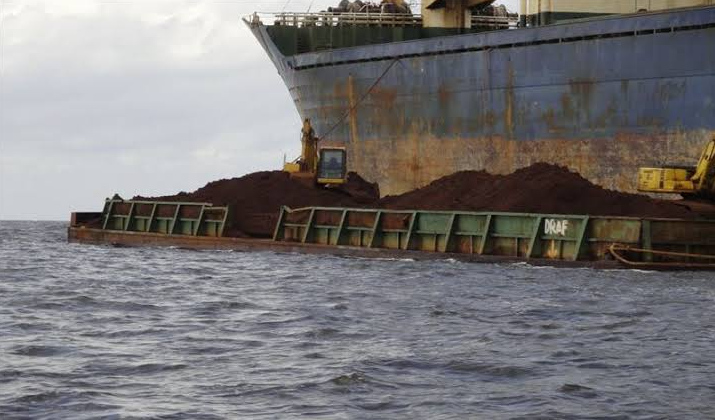
Nickel ore exported from the Philippines and other tropical regions typically undergoes only minimal processing before loading, containing large quantities of fine clay and soil particles. These particles have moisture-retaining properties, and under the continuous motion of a vessel, they may lose strength, causing the cargo to liquefy or shift suddenly.
Crucially, even ore that appears relatively dry at the time of loading may become unstable during the voyage.
Under the International Maritime Solid Bulk Cargoes Code (IMSBC), nickel ore is classified as Group A cargo. Shippers must provide documentation indicating the cargo's moisture content and transportable moisture limit, and the cargo's moisture content at loading must be below this limit.
Just as nickel ore shipments from the Philippines and the Solomon Islands are surging, the International Group of P&I Clubs, INTERCARGO, and industry body Roxburgh issued a joint report in June this year, warning of issues including non-standard sampling practices, inadequate stockpile cover from rain, questionable laboratory testing procedures, and restricted access for surveyors appointed by shipowners to fully inspect cargoes.
The report noted that some declared moisture content figures differed from independent test results by six to ten percentage points, with deviations in individual cases even larger.
In January this year, the 56,095-dwt vessel "Devon Bay" capsized while carrying approximately 55,000 tonnes of nickel ore from the Philippines to China, underscoring these risks once again. The accident resulted in two seafarers losing their lives, with four others reported missing. Preliminary statements from the crew indicated that cargo liquefaction may have caused a rapid shift of cargo to the port side, but the investigation has yet to reach a final conclusion.
It is understood that port facilities in the Philippines are very basic. Open-pit nickel ore is stored in stockpiles directly on beaches, fully exposed to the southern Philippines' monsoon climate. In theory, mines should carry out testing to ensure that the nickel ore's transportable moisture limit is within safe parameters. However, the reliability of such testing has long been questioned, and several P&I clubs have repeatedly warned that certificates are often falsified.
In INTERCARGO's study of bulk carrier accidents between 2015 and 2024, cargo liquefaction was responsible for 89 fatalities, of which 55 died in such incidents. Although the number of vessels lost to liquefaction is lower than those lost to grounding, it remains the single largest cause of crew fatalities.
Hot News